Walk right into any type of well-run center and you'll locate the peaceful scaffolding of an emergency control organisation sitting behind everyday operations. On normal days, it is invisible. When alarm systems noise, those roles become the distinction between a clean evacuation and a disorderly scramble. Emergency situation wardens, replacement wardens, and primary wardens don't just follow a list. They make judgments in moving problems, they communicate under stress, and they work with people that are terrified, stubborn, or merely puzzled. Training is how you transform excellent intents into consistent performance.
This guide distills the useful core of warden training, consisting of the nationally identified PUA units many organisations depend on: PUAER005 Operate as Component of an Emergency Situation Control Organisation and PUAER006 Lead an Emergency Situation Control Organisation. If you manage a facility, lead safety, or are stepping into a warden duty for the very first time, you'll locate the standards, practices, and side instances that shape genuine response.
What an emergency warden truly does
Titles differ by jurisdiction and market, but the backbone is comparable. Wardens evaluate their locations, initiate and support emptyings or shelter-in-place, assist prone occupants, and feed dependable information to the chief warden. They don't combat fires unless classed, educated, and safe to do so with initial attack devices, and even then, life security precedes. In multi-tenant structures or stretching schools, wardens additionally end up being navigators, adjusting worldwide plans to local floor quirks.
A common misunderstanding is that fire wardens just deal with fires. In practice, the emergency warden's remit extends clinical occasions, bomb threats, hazardous chemical releases, loss of power affecting crucial systems, hostile intruder incidents, and severe weather condition. The very best fire warden training constructs transferable skills: situational evaluation, risk-based decision production, disciplined interaction, and management under stress.
The training backbone: PUAER005 and PUAER006
Australia's PUA Public Security Training Bundle provides an organized method to warden skills that lots of organisations embrace or mirror. PUAER005 Run as Part of an Emergency Control Organisation concentrates on wardens' functional capacities: reading the environment, using treatments, managing passengers, and reporting up the chain. PUAER006 Lead an Emergency Situation Control Organisation is the chief warden stream, where coordination, method, and multi-agency interfacing concerned the fore.
If you are scoping a fire warden course or chief warden course, seek companies that explicitly straighten to these systems. Companies often list them as PUAER005 program or PUAER006 training course, often mixing the older code PUAER with PUA devices in marketing. The web content must cover the significance of "run" and "lead," not just state policy. You desire scenario-driven practice, not a slideshow of regulations.
Roles, hats, and rapid recognition
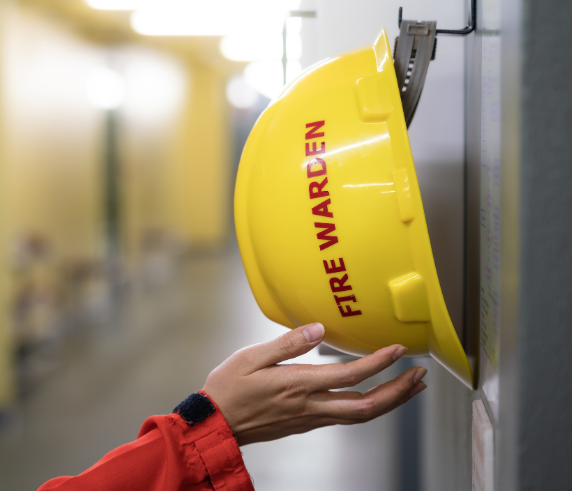
Warden recognition looks enchanting up until you remain in a smoke-filled passage and the lawn sprinklers have actually decreased presence to a fog. Clear function identification assists owners decide whom to follow. Lots of work environments utilize coloured headgears or hats, vests, and lanyards. There is variant, but the conventions are extensively understood:
- Red for fire wardens or area wardens, including flooring wardens. White for the chief warden or chief emergency warden, occasionally with a black stripe for the deputy chief. Yellow or orange for communications or first aid roles, depending on the site.
If your team asks what colour helmet a chief warden puts on, respond to simply: white. That chief warden hat colour aids marshal authority at a look. Whatever your system, make it constant throughout all tenancies if you share a building. Laminated wallet cards that show the colour code and radio networks save time in combined environments.
Baseline capacity for every single warden
Competent wardens aren't superheroes. They are self-displined generalists with a couple of tough abilities. A solid warden course must build these warden course abilities and confirm them with functional assessment.
Wardens learn to survey their areas in mins, not twist. They look for persons calling for help, doors that open up the wrong way, and choke points most likely to obstruct. They discover to make use of extinguishers just where skilled and risk-free to do so, however just as notably, when to close a door and move on. They don't become firefighters in a weekend break. They end up being decisive guides who keep individuals approaching life safety.
Radio technique matters. Brief transmissions, sensible order, and no freelancing on networks. The chief warden requires tidy inputs that enable them to make a plan, not three variations of the same rumor. Great emergency warden training develops this practice with tension drills. The very first time you exercise radio brevity should not be during an actual discharge with fire staffs en route.
Chief warden leadership, in practice
The chief warden duty is less about personal heroics and even more regarding synthesis. PUAER006, usually called the chief warden training, concentrates heavily on these ability:
- Establish the Emergency situation Control Organisation quickly. Appoint wardens to voids, verify communications, and established an occurrence clock. Eight minutes seems like infinity during a fire alarm. Utilize it well. Triage information. Separate confirmed observations from supposition. Notes on a white boards or a simple digital log maintain a shared picture visible. Choose the ideal technique. For a small electric fire in a contained space, a regional evacuation might be enough. With a smoke migration or chemical release, you pivot to a sector-based or complete structure evacuation. Severe weather may call for shelter-in-place. The most effective chief wardens stand up to autopilot. Interface with -responders. Fire crews will certainly take command on arrival, yet your brief issues. Layout, plant shutoffs, persons unaccounted for, area of the last recognized threat, and any type of impaired or mobility-impaired passengers that require rescue assistance are gold. Coordinate the return to regular. Presented re-entry, cause confirmation, and debrief capture. It is alluring to "all clear" as well rapidly, especially under manufacturing pressure. Resist it.
On paper, these are uncomplicated. In genuine events, you will make compromises under time pressure. The chief fire warden who has actually practiced those selections will act with clearness when secs matter.
Fire warden demands in the workplace
Numbers rely on the size and complexity of your website. Tiny single-storey workplaces may operate well with a chief warden, a deputy, and one warden per 20 to 50 occupants. Multi-storey or complex centers require one warden per area or area, with deputies for redundancy. Change work and leave lineups suggest you need more names than a cool org chart suggests. I advise a 1.5 multiplier on head count to cover lacks. If 6 wardens are necessary theoretically, train nine.
Training cadence is an additional requirement typically downplayed. Induction is insufficient. Arrange refresher course emergency warden training at least each year, with situation variation. Tabletop exercises can keep muscular tissue memory between full evacuations. Rotate scenarios: kitchen fire, gas leakage, medical emergency situation blocking a stair, obstructed egress as a result of repair. Individuals remember what they do, not what they hear once in a classroom.
Fire warden training requirements and the law-adjacent reality
Jurisdictions established baseline commitments, commonly referencing standards like AS 3745 or its local counterparts. Those requirements explain the emergency plan, the emergency situation control organisation, and the training rhythm. They hardly ever define your messy mezzanine storage cage, the forklift charger corner, or the narrow stairs everyone neglects when they panic. Bring the requirement to life by strolling the site with your wardens quarterly.
A regular compliant fire warden training program includes hazard recognition, alarm system kinds and meaning, discharge routes, setting up locations, use of fire extinguishers, and communication protocols. Include the site-specific material that has a tendency to be neglected: after-hours access, vital safes, handicapped haven factors, door security overrides, and any type of plant that should be closed down manually. If you run labs or workshops, include the details chemical or procedure risks and the way ventilation systems interact with smoke control.
Evacuation, from drill to reality
Evacuation is stealthily straightforward on a diagram. People do not behave like arrowheads. They collect belongings, they search for close friends, they take pictures. Some freeze, some argue, and some sprint. The task is to transform that human tangle into flow.
One of one of the most reliable drills I ran as a chief warden consisted of a grown clog generally stairway. The front-of-house group did what numerous groups do: they tried to require the acquainted path. The flooring warden, educated to expect the unforeseen, rerouted website traffic to the second stairway and oriented those at the back to preserve a constant pace. We lost probably chief fire warden 30 secs in general, yet more significantly, we confirmed the 2nd egress held ability under load.
For multi-storey buildings, don't flood the stairways. Phase the release by floors to stay clear of bottlenecks. Show wardens to sweep laterally first, then approach the staircase, examining that fire doors lock behind them. Smoke spread often traces through the doors individuals wedge open for ease. You want the routine of closing behind you so ingrained that it holds under stress.
Persons requiring assistance
Every work environment includes people who require help throughout emptying, permanently or momentarily. Crutches, late pregnancy, stress and anxiety problems, post-surgery constraints, and language barriers all issue. Your warden training program need to consist of a basic, respectful way to identify demands and pre-assign buddies. Refuge points with two-way interaction enable a controlled handover to fire crews when stairs are not workable.
Be cautious with evacuation chairs. They serve, however just when wardens are trained and certain. Exercise on the real staircases you will certainly utilize, with a weighted mannequin or prepared volunteer, under controlled conditions. In an actual case, you don't desire the first descent to reveal an unpleasant touchdown geometry you didn't anticipate.
Using first attack firefighting equipment
The line is intense: life safety and security over building every time. Extinguishers and fire blankets get time and stop small fires from growing, but they are not a commitment and they should never ever be made use of to chase decreasing returns. If trained, measure using PASS: pull, purpose, press, move. Keep a clear egress route at your back. Stop if your gut claims the fire is bigger than a trash can or you can feel warmth pressing you back. I have actually seen sympathetic personnel lose difficult secs to a persistent electrical fire that never must have been challenged.

Include tactical detail in your fire warden training. Not all extinguishers are equivalent. Carbon dioxide for electrical fires, foam or dry chemical for flammable liquids, water mists for regular combustibles, and a firm "no" on water for energized devices. Increase your website strategy with the type and location of each extinguisher and include it in the warden pack.
Communication that reduces through
Wardens survive 2 networks: the radio web for command and the human channel for occupants. On the radio, much less is much more. Use phone call indicators, provide place initially, then condition, then demand. Instance: "Level 3 West - visible smoke in print space - evacuating south stairway - two flexibility helps." Your chief warden now knows where, what, and who needs aid. Passengers don't require that level of detail. They require calm, direct phrases: "Leave possessions, follow me, utilize the south stair, hold the handrail." Repeat. The cadence becomes a metronome that calms people and keeps them moving.
One practice worth drilling is the closed-loop confirmation. If the chief warden designates a job, the warden repeats it back. "Replicate, sweep Degree 2 eastern wing, report clear." It seems militaristic in a quiet conference room. In a noisy corridor, it protects against 2 wardens from duplicating job while no one checks the web server room.
The chief warden's occurrence rhythm
When the alarm journeys, the chief warden's mental clock begins. A straightforward rhythm offers well:
- Verify the signal and establish the preliminary reaction. Single-zone activation in a known hassle location might call for examination. Multiple areas or visible smoke causes evacuation. Establish interactions and designate protection. Verify that each floor or zone has an energetic warden. Load gaps with offered team or deputies. Stabilize the circulation. Direct wardens to regulate stairways, redirect from blockages, and avoid cross-traffic. Interface with exterior -responders. Give a crisp brief on arrival, then change to sustain setting, managing residents at the setting up location and keeping accountability. Close out attentively. Only come back when accredited, record what worked and what really did not, and capture follow-ups with owners and due dates.
That rhythm straightens closely with the evaluation standards in PUAER006 lead an emergency situation control organisation, but it also fits the messy, iterative fact of real-time incidents.
Selecting a warden course that actually constructs competence
Course sales brochures commonly look the very same. When you review a fire warden course or chief fire warden course, request specifics. How much time is functional? Do participants use radios? Do they go through multiple situations, consisting of non-fire emergency situations? Will the analysis confirm that participants can operate as part of an emergency situation control organisation under time stress, or does it just examination recall?
The ideal emergency warden course carriers see your website and customise. They adjust web content for your building systems, from smoke control zones to access control bypasses. They include bomb threat and questionable package procedures for workplace towers, and chemical spill treatments for laboratories. They practice weather condition shelter techniques for regions with serious storms. They reveal you where your plans are brittle.
Drills that matter, not drills for show
Treat drills as a financial investment, not a compliance tax. Revolve the day and time so you reach all shifts. Inform lessees beforehand that you will have observers. Place those viewers at choice points: stair entries, squeeze points, assembly location rollout. Time from alarm system to first activity, to stairway engagement, to assembly liability. If your building has several stairways, procedure tons circulation. The numbers tell you where your plan leaks.
After the drill, take fifteen mins for a stand-up debrief with wardens. Ask what they saw and what they dealt with. Capture 3 activities, not twenty. Appoint owners. Comply with up before the next drill. The loophole from monitoring to action is the difference between performative safety and security and operational resilience.
Integrating clinical action and security
Fire is visceral. Numerous genuine interruptions are clinical or safety and security relevant. Wardens require to comprehend exactly how their duty intersects with first aid and protection. In a cardiac arrest, the chief warden may coordinate crowd control and lift priority for paramedics while the first aid group runs the resuscitation. In a hostile intruder scenario, the approach changes to "escape if risk-free, hide if retreat is not feasible, and as a last resort, interfere with." That sits along with, not inside, conventional fire discharge. Your plan must explain who calls the approach and exactly how messages travel without triggering harm.
Security systems can help or impede. Doors that fail to locked on power loss can trap individuals if not set up with egress priorities. Train wardens on handbook overrides and consist of protection in drills. I've seen a perfect discharge stumble when the gates refused to release after a partial power failing, creating heartburn at the primary exit. One wrench on the mechanical launch would have fixed it, however only security recognized where the wrench lived.
Documentation people really use
Wardens won't browse a 90-page strategy throughout an emergency. Provide succinct work cards and a pocket map. Laminated flooring A5 cards work well: on one side, the role checklist, and on the various other, the map with egress routes, extinguisher types, refuge points, and assembly locations. For chief wardens, include a log sheet design template. Basic tools make it through stress.
Keep your papers living. When upkeep relocates an exit indication or building and construction closes a corridor, update the map and short wardens. Tie updates to the permit-to-work process so changes feed right into the emergency strategy, not surprise it.
Competency maintenance: beyond ticking the box
Formal recertification cycles differ, but capability discolors without usage. Two short refreshers a year, among them functional, keep the side. Mix in micro-drills: a five-minute radio call examination on a Wednesday early morning, a fast sweep method for a new warden, a walk-through of the cellar fire pump area with the maintenance group. These snacks of method add up. If a warden relocates duties or floorings, re-train them for the new context. A skilled warden in a new design is a novice with self-confidence, which can be risky.
Culture: why individuals follow wardens
Systems issue, but people follow people. Wardens who project calm, who know names, and who move with function pull others along. I worked with a floor warden who habitually strolled the long method around at 4 p.m. daily, chatting with the laboratory technologies and the function team. Throughout a discharge months later, those same people trusted her direction without debate. Experience made authority really feel legitimate. You make that long before the alarm.
Common pitfalls and exactly how to stay clear of them
Most failings I see fall into a couple of patterns. Overreliance on a solitary stair or leave, bypassing the detour even when the strategy states otherwise. Short-handed warden groups, especially on late or very early shifts. Radios that are out of fee or set inconsistently. Assembly locations picked for benefit as opposed to safety, such as straight across from the primary entry where responders require to stage. And the traditional, doors wedged open, quietly undoing smoke control layout. A quarterly walk with an unconvinced eye captures these. Develop the habit.
Where PUAER005 and PUAER006 suit the larger picture
The PUAER005 operate as component of an emergency control organisation unit develops a baseline for wardens that will certainly accomplish the strategy. The PUAER006 lead an emergency situation control organisation device raises chief wardens to plan, work with, and adjust. Combined, they offer a language and structure your team can share. That typical framework is useful when personnel relocation between websites or when a multi-tenant structure runs a joint drill.
Look for training providers that instruct the spirit of those systems, not just the letter. Competence shows in the unplanned moments: a lift stuck in between floors throughout evacuation, a parent who wishes to return to for a forgotten bag, a smoke detector throughout an electrical storm that conceals alarms. Those are the sides where training earns its keep.
A compact warden start-up checklist
- Confirm your warden team head count covers shifts, leave, and special events. Issue identification, radios, and task cards. Examination radios weekly. Walk every route and staircase. Close doors, check locks, and map choke points. Run one drill with a planned blockage. Procedure time and flow. Debrief, fix three things, and schedule the next practice.
The last metre
Emergency action lives in details determined in metres and secs. The last metre to the stair landing, the last individual signed in the toilet, the last secs invested describing the route rather than directing and relocating. Wardens who train to that range deliver calm in the noisy center of an actual occurrence. Whether you wear the red warden vest or the white chief warden hat, buy training that respects the truth of your site, speaks clearly, and techniques up until good habits are automatic.
If you are developing your program, slow to PUAER005 for wardens and PUAER006 for chief wardens, set it with site-specific drills, and develop a culture where security isn't a poster yet a practiced craft. The day you require it, individuals will follow you because you have led them there sometimes before, with treatment, quality, and a strategy that works when the strategy satisfies the fire alarm.

Take your leadership in workplace safety to the next level with the nationally recognised PUAFER006 Chief Warden Training. Designed for Chief and Deputy Fire Wardens, this face-to-face 3-hour course teaches critical skills: coordinating evacuations, leading a warden team, making decisions under pressure, and liaising with emergency services. Course cost is generally AUD $130 per person for public sessions. Held in multiple locations including Brisbane CBD (Queen Street), North Hobart, Adelaide, and more across Queensland such as Gold Coast, Sunshine Coast, Toowoomba, Cairns, Ipswich, Logan, Chermside, etc.
If you’ve been appointed as a Chief or Deputy Fire Warden at your workplace, the PUAFER006 – Chief Warden Training is designed to give you the confidence and skills to take charge when it matters most. This nationally accredited course goes beyond the basics of emergency response, teaching you how to coordinate evacuations, lead and direct your warden team, make quick decisions under pressure, and effectively communicate with emergency services. Delivered face-to-face in just 3 hours, the training is practical, engaging, and focused on real-world workplace scenarios. You’ll walk away knowing exactly what to do when an emergency unfolds—and you’ll receive your certificate the same day you complete the course. With training available across Australia—including Brisbane CBD (Queen Street), North Hobart, Adelaide, Gold Coast, Sunshine Coast, Toowoomba, Cairns, Ipswich, Logan, Chermside and more—it’s easy to find a location near you. At just $130 per person, this course is an affordable way to make sure your workplace is compliant with safety requirements while also giving you peace of mind that you can step up and lead when it counts.